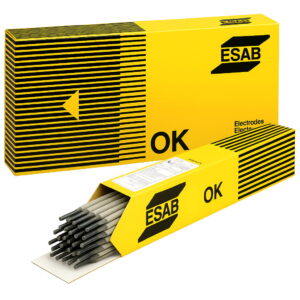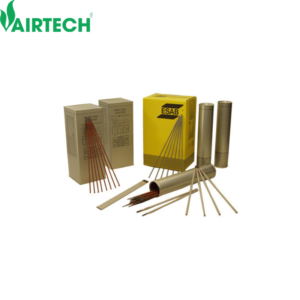
Que hàn Weld T CuNi 2.0mm 5Kg – WR00096
8,955,000 ₫
Que hàn Weld T CuNi 2.0mm 5Kg – WR00096. Que hàn hợp kim đồng–niken chuyên dùng để hàn các hợp kim Cu-Ni có hàm lượng niken từ 10–30%, như 90/10, 80/20 và 70/30. Thành phần được bổ sung Ti nhằm giảm rỗ khí và kiểm soát silic để hạn chế nứt do đông đặc.
Sản phẩm phù hợp để hàn với hợp kim niken nhóm 400–500 (Monel), tạo lớp hàn chuyển tiếp giữa các vật liệu khác nhau và phủ lớp chống ăn mòn trên thép. Kim loại mối hàn có khả năng chống ăn mòn cao trong môi trường nước biển và độ bền cơ học tốt.
Ứng dụng phổ biến trong nhà máy khử muối, hệ thống đường ống và các công trình ngoài khơi. Thường sử dụng khí argon hoặc hỗn hợp argon–hydro để đạt bề mặt mối hàn sạch và đẹp.
Copper-nickel alloy welding rods are designed for welding copper alloys with a nickel content of 10 to 30% (copper-nickel), such as 90% Cu + 10% Ni, 80% Cu + 20% Ni, or 70% Cu + 30% Ni; some types may be doped with Fe and Mn. To reduce the risk of porosity, these rods are doped with a small amount of Ti. To reduce the possibility of solidification cracking, the silicon content in the rods is limited. The thermal conductivity of these alloys is similar to that of low-carbon steel, therefore no preheating is required.
These rods are used to weld these alloys with nickel alloys of groups 400 and 500 (Monel), to create a transition layer on edges when welding different material combinations, and to create a corrosion-resistant layer on steel. When hardfacing steel, excessive iron contamination in the molten weld pool should be avoided. The resulting metal exhibits high corrosion resistance in seawater and relatively high strength properties.
Its main applications include desalination plants and offshore structures. Typically, pure argon is used as a shielding gas, but argon-hydrogen mixtures are preferred because they improve weld pool flow and produce a cleaner weld surface.

Sản phẩm tương tự